TERTIARY
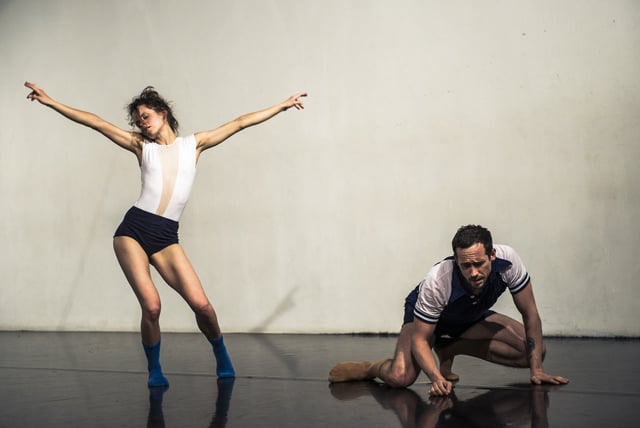
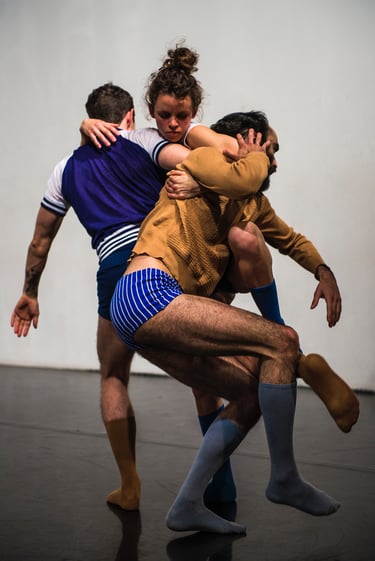
examines how the building blocks of empathy become a visual-tactile tool connecting the performers to each in other in the same way they connect to the audience. In neuroscientific theories, the borders between where one person stops and another begins are blurred. There are no interacting minds or brains but only interacting bodies or persons.
Before pro-social concern or compassion, empathy exists as stimulated neurons allowing us to mentalize and share experiences of those around us. It is suggested people with autism or sociopaths lack these brain functions that allow us for example, to feel with our eyes. ‘Watching is like feeling’ is a neuroscientific claim that TERTIARY puts to the test. By using psychological and physical circumstances, the delicate trio that explores how dynamic movement can allow us to witness a person's conceptual thoughts through movement.
Concept: Michael O'Connor
Choreography & Performance: Raul Maia, Michael O'Connor, Karin Pauer
Sound: Alexander Kasses
Production: a waiting dog
Production Manager: Claire Granier
Supported by: Wien Kultur, Raum 33, BMUKK, TanzQuartier Wien, theatercombinat, Mumbling Fish.
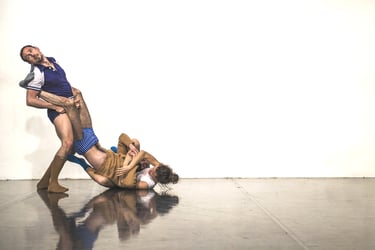
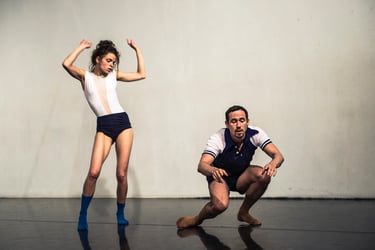
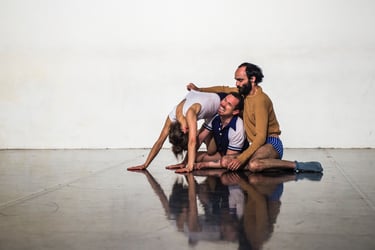
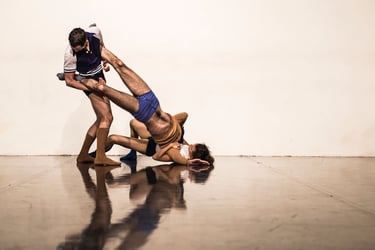
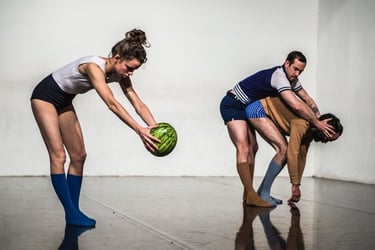
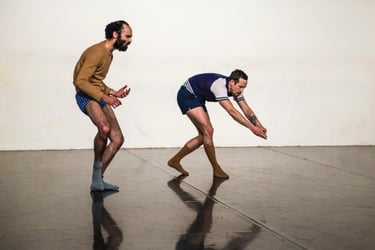
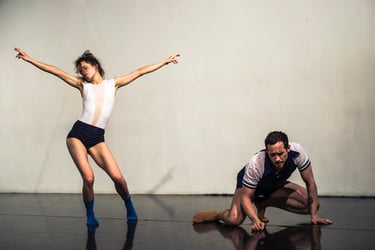
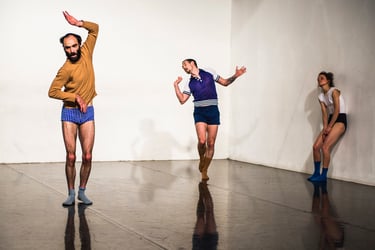
c: G. Scheu
As far as human behavior, perception is often a deceptive matter. Especially when empathy comes into conflict with imaginings. This tension is performed by three very different but equally charismatic personalities, with great sensitivity and almost an equally strong sense of irony. “ – Helmut Ploebst/ der Standard
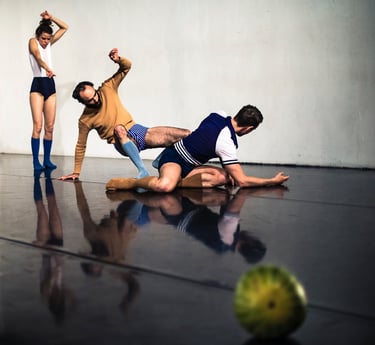
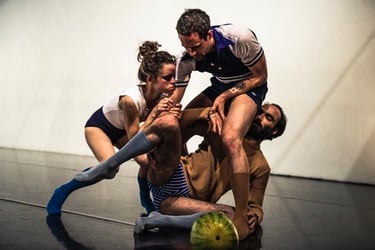
“The underlying structure of TERTIARY results from the given space, the space between the dancers, their contact with each other, a watermelon and the musical score.”
- Ulli Moschen/Falter
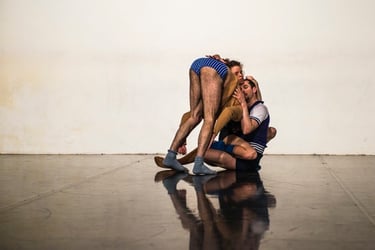
"More heated than affectionate, more aggressive than erotic, passionate in any case, [...] tangling and intertwining of three bodies into one."
- Ditta Rudle/ Tanz.at